My story
It began with a simple question.
Why is there often a gap between what students are capable of and what classrooms make visible?
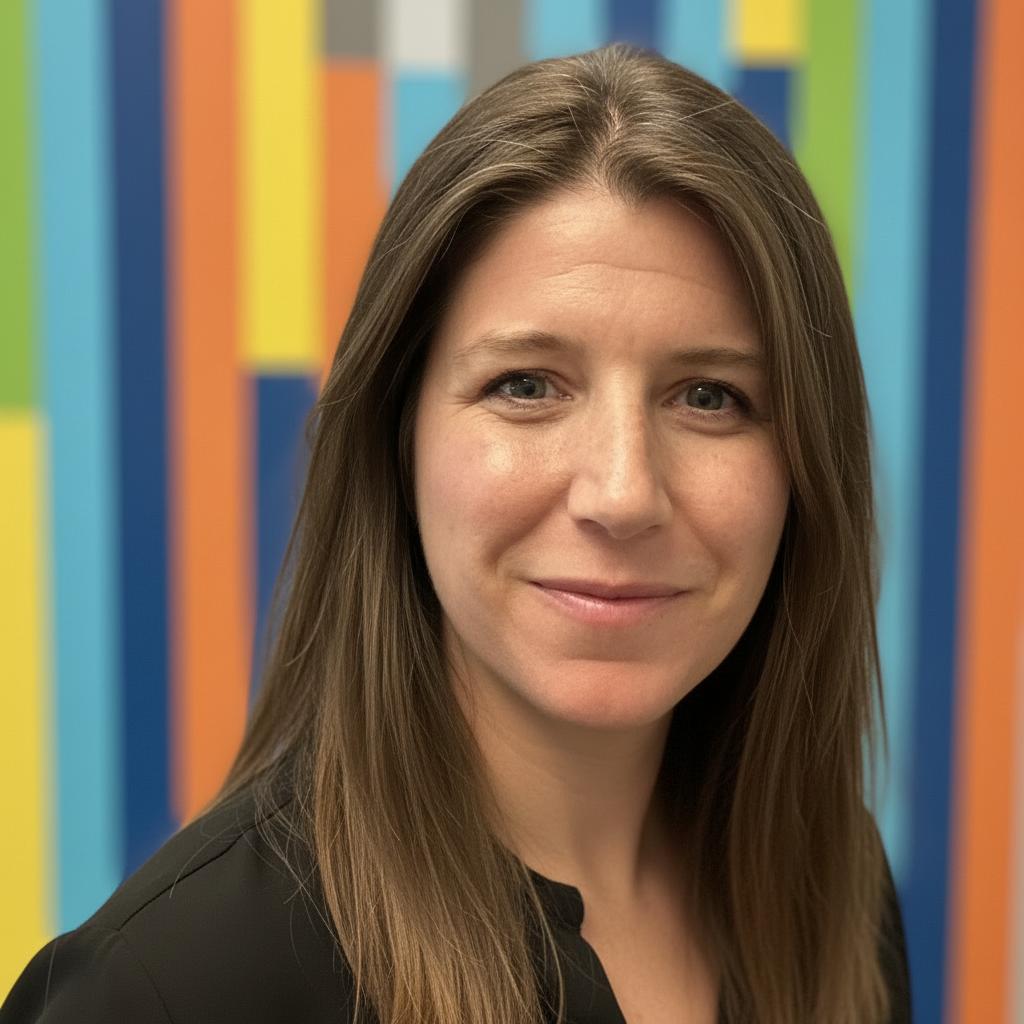
School has shaped every chapter of my life — as a student navigating my own neurodivergence, as an educator across public and independent schools, and as a parent raising children who learn in beautifully different ways. Each of those chapters taught me something I couldn't have learned from the outside.
I was the kind of student who met expectations. Teachers didn't worry about me. I turned in my work, kept up with the curriculum, moved from grade to grade without incident. But underneath, I was working twice as hard as most of my classmates to land on average results. The struggle was invisible — invisible to my teachers, invisible to my schools, and for a long time, invisible even to me.
My strengths showed up everywhere except the classroom. Whenever a team needed a leader, or wherever determination and grit translated into outcomes — like athletics — I thrived. In school, I was fine, quiet, unremarkable. It wasn't until my doctoral program that an educational environment finally looked at me and saw my strengths clearly. That moment — being truly seen, after so many years of internalizing the struggle — changed me. And it's one of the reasons I do this work.
The pattern I kept seeing
Over more than sixteen years working in elementary classrooms, high school hallways, academic support programs, and leadership teams, I saw my own story play out in other students, in different forms, again and again. When outcomes fail to reflect potential, the issue is rarely motivation or ability. More often, it is misalignment between students and the systems meant to support them.
I saw capable, motivated students working twice as hard to meet expectations that were never built with them in mind. I saw teachers pouring themselves into their classrooms, carrying responsibility for increasingly complex learners without systems strong enough to sustain them. I sat with families trying to understand why their child's effort wasn't translating into outcomes that reflected real potential.
And then I went home and watched it happen at my own table.
At my own table
My own kids are deeply capable. They are also unmistakably neurodivergent — and watching them grow has shown me up close what so many kids across so many classrooms are experiencing every day.
The student who understands everything and forgets to turn it in. The student who learns through her eyes and hands but sits in classrooms that only speak to her ears. The student who'd be underestimated through the narrow window of spelling and handwriting, and extraordinary through the wide lens of his strengths. The student whose vocabulary runs far ahead of his reading — sharp, witty, focused in ways that no rubric quite catches.
What an antiquated system reads as deficit, a well-designed one reads as difference. Same children. Different frame. Different futures. Living with it as a parent — while knowing from an educator's seat what could be different — is what makes this work personal.
A different set of questions
Over time, a different set of questions began to guide my work. What if we designed learning environments around who students actually are, rather than around who systems are most comfortable serving? What if we began with strengths and built structures that allowed those strengths to drive growth?
The language of neurodivergence was never meant to categorize students as difficult or deficient. It emerged to recognize something far more important: that human minds work in different ways — and those differences are not obstacles to education. They are opportunities for it.
Education was once designed to produce identical thinkers — efficient, compliant, and sortable. That model has long since outlived its purpose. What we need now are systems that cultivate distinct ones.
When educators are equipped to teach diverse learners and academic support is thoughtfully integrated into instruction, classrooms do not become weaker. They become deeper. More rigorous. More human.
Differences stop feeling like disruptions to manage and begin functioning as sources of insight, perspective, and possibility. Because what makes students different is often exactly what allows them to see, solve, and create in ways others cannot.
Cathedral building
Teaching, at its best, is cathedral building. Educators show up each day investing in young people whose adult lives they may never witness, guided by hope and the belief that their work matters.
Crockett Education Consulting was born in the space between high expectations and disparate outcomes — and from a refusal to accept that gap as inevitable.
This work remains deeply personal to me. I stay close enough to students to remember why it matters. And I think big enough to know that when systems change, everyone benefits.
When we design educational environments with intention and clarity, we do more than support students. We honor the differences that unlock the very strengths that move learning forward.
Let's design something that works — for your child, your classroom, or your school.
Let's find out what that looks like together.
Begin the conversation